

7 content mistakes that are undermining your brand's credibility in Portugal
Brands in the Portuguese market often overlook localisation, translation quality and cultural adaptation. Discover 7 content mistakes that can undermine credibility with Portuguese customers — and how to avoid them.
When international brands enter the Portuguese market, content can fail for reasons that go far beyond simple translation errors. Without proper localisation, messages that perform well in one language may lose clarity, relevance, or credibility in European Portuguese.
The issue is often not the translation itself, but the level of adaptation behind it. Machine translation with limited post-editing, content transferred directly from Spanish or Brazilian Portuguese, inconsistent terminology across channels, and marketing copy translated word for word can all weaken the customer experience and dilute brand messaging.
Effective localisation requires more than linguistic accuracy. Content must align with the expectations, cultural context, and communication preferences of Portuguese audiences. Otherwise, seemingly minor choices in wording, tone, or terminology can affect trust, engagement, and overall brand perception.
Keep reading to discover a few examples and how to avoid them through a more strategic approach to localisation, transcreation, and linguistic quality assurance.
All examples were found online by a member of the public: me.
1. Using Brazilian Portuguese for a European Portuguese audience
This is from a series of emails I received while shopping at an online store.
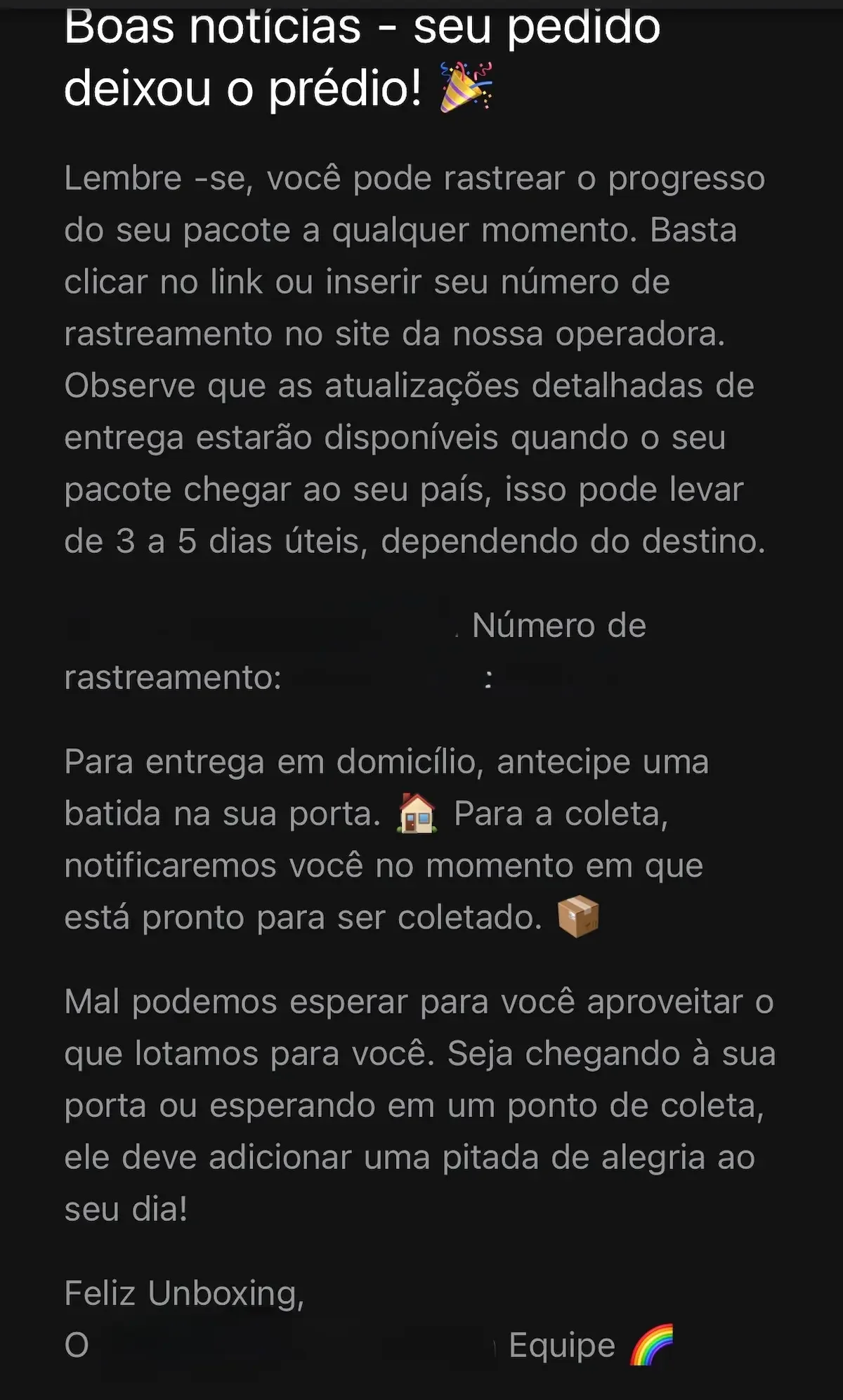
There are many aspects to address in this short e-mail:
The form of address (explicit use of eu-você) and the lack of the definite article o before seu pedido are clear signs that this is Brazilian Portuguese.
Certain words, such as rastrear, pacote, operadora, coleta, lotamos, and equipe are not used in European Portuguese in this context.
Although they may be understood by a general audience in Portugal, they're not the most suitable options and require linguistic adaptation.
For instance, the use of lotamos in this context creates confusion about what the sentence is really about. My guess is it comes from a literal translation of "We can't wait for you to enjoy what we've prepared/packed/put together for you."
Additionally, the incorrect word order in certain sentences, such as "O [Online store name] Equipe", indicates that this is almost certainly machine translation.
The feminine noun equipa must take the feminine article a, not o. Even in Brazilian Portuguese, "O [Online store name] Equipe" would not be correct in terms of word order.
Here's my localisation suggestion to improve this text, with a few natural options to choose from:
Subject: Boas notícias: a sua encomenda está a caminho!
Não se esqueça de que pode acompanhar o estado/seguir o percurso da sua encomenda a qualquer momento.
Para tal, basta clicar no link ou introduzir o seu número de seguimento/acompanhamento no site da transportadora.
As atualizações detalhadas de entrega só ficarão disponíveis quando a encomenda chegar ao país de destino, o que poderá demorar entre 3 e 5 dias úteis, dependendo do local.
Número de seguimento/acompanhamento [Online store name]:
Se tiver optado por uma entrega ao domicílio, basta aguardar a visita da transportadora. Caso prefira ir buscar a encomenda a um ponto de recolha, receberá uma notificação quando ela chegar.
Esperamos que desfrute da encomenda que preparámos para si. Temos a certeza de que vai alegrar o seu dia.
Divirta-se!
A equipa [Online store name]
This solution improves readability, leaves no room for confusion and delivers the message in a simple but effective way.
That's the difference between being polished and informative or compromising your clients' buying experience, creating confusion when they're just trying to check the status of their order.
2. Publishing machine-translated content without human review
The following are a few examples of what happens when companies skip quality assurance and decide to publish the unreviewed output of machine translation.
These demonstrate why localisation carried out by human experts is highly recommended.

In this example, the noun phrases "Free shipping", "Free returns", and "Fit to the waist" are in a supposedly European Portuguese post, which creates immediate inconsistency in language strategy.
The Portuguese text is syntactically broken and machine-translated, with repeated fragments.
Divertida almofada de amorzinho nas costas is semantically unclear and unnatural in European Portuguese.
Com apoios de braço em os lados contains a clear grammatical error. The correct European Portuguese is nos lados.
"Discounts you will not expect on all products" and the hashtag #buynow introduce untranslated, direct English marketing clichés that reinforce the lack of coherence.
This reads like raw machine output that was not proofread or adapted for the European Portuguese target market.
Also, the effect caused by amorzinho, an affectionate diminutive typically used in romantic or intimate contexts, produces ambiguity and an oddly suggestive undertone.
A more natural, accurate, professional-sounding option would be:
Envio grátis
Devoluções grátis
Adaptação ergonómica à cintura
Almofada ergonómica com apoio lateral para os braços. Descubra descontos inesperados em toda a gama de produtos. #CompreJa
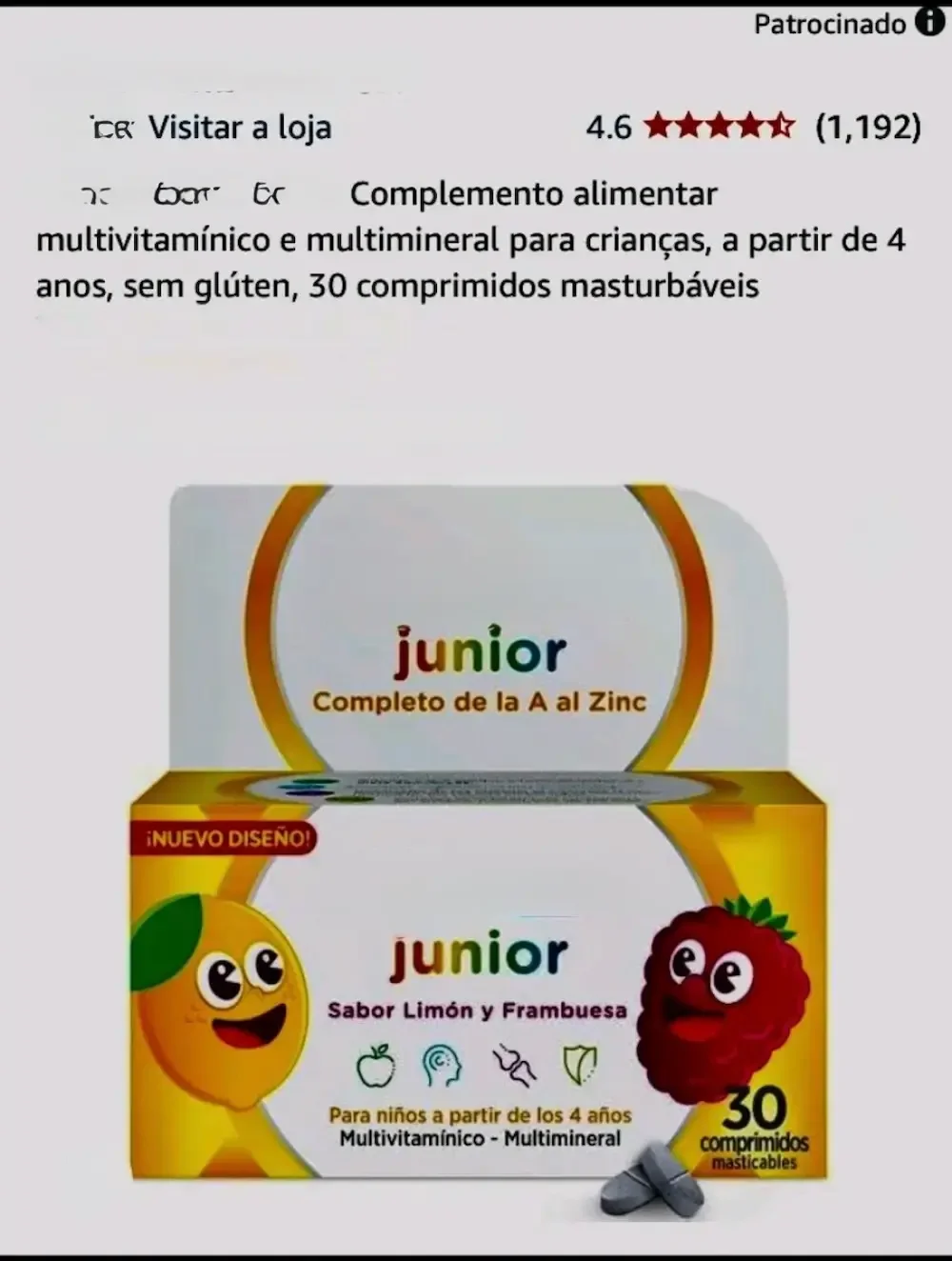
This screenshot shows a serious mistranslation with potentially reputational consequences.
The error replaces a harmless pharmaceutical term with a sexually explicit word, which is especially problematic in a product meant for children.
The word masturbáveis is completely incorrect and highly inappropriate in this context.
This critical failure with an ill-chosen semantic distortion demonstrates a lack of validation in localisation for sensitive content.
It was likely derived from confusion between the English "chewable" and a Portuguese verb structure ending in -ável.
The correct and appropriate translation of "chewable tablets" is, undoubtedly, comprimidos mastigáveis.

This message shows a mix of informal marketing tone, inconsistent phrasing, and structural awkwardness.
O teu pedido já chegou! vs. A tua encomenda foi entregue creates a mismatch in meaning (arrival vs. delivery confirmation).
[Parcel delivery company name] apenas indicou is a literal translation from the English "has just confirmed/reported". Literally translated, this means that the company has only indicated that the parcel has been delivered, which creates confusion.
É hora de desembrulhar o bom material is unnatural in European Portuguese, and it’s most likely a literal translation of "the good stuff".
The tone of voice is very inconsistent, jumping between excitement, logistics, and casual encouragement.
This time, it also has a different form of address (eu-tu).
Additionally, "Package contents:" should have been translated, as it was left in English.
My suggestion:
A tua encomenda foi entregue!
Boas notícias, Teresa: segundo indicação da [Parcel delivery company name], já recebeste a tua encomenda!
Agora só tens de a abrir e desfrutar.
Se precisares de alguma coisa, podes contar connosco.
Esperamos que te divirtas!
A Equipa [Online store name]
Conteúdo da embalagem:
3. Ignoring cultural nuances and local expectations
Cultural adaptation is essential when localising content. Ignoring cultural nuances and local market expectations will make a message less relevant and reduce audience engagement.
For this reason, it is essential to align the tone of voice and content with the specific context of each country.
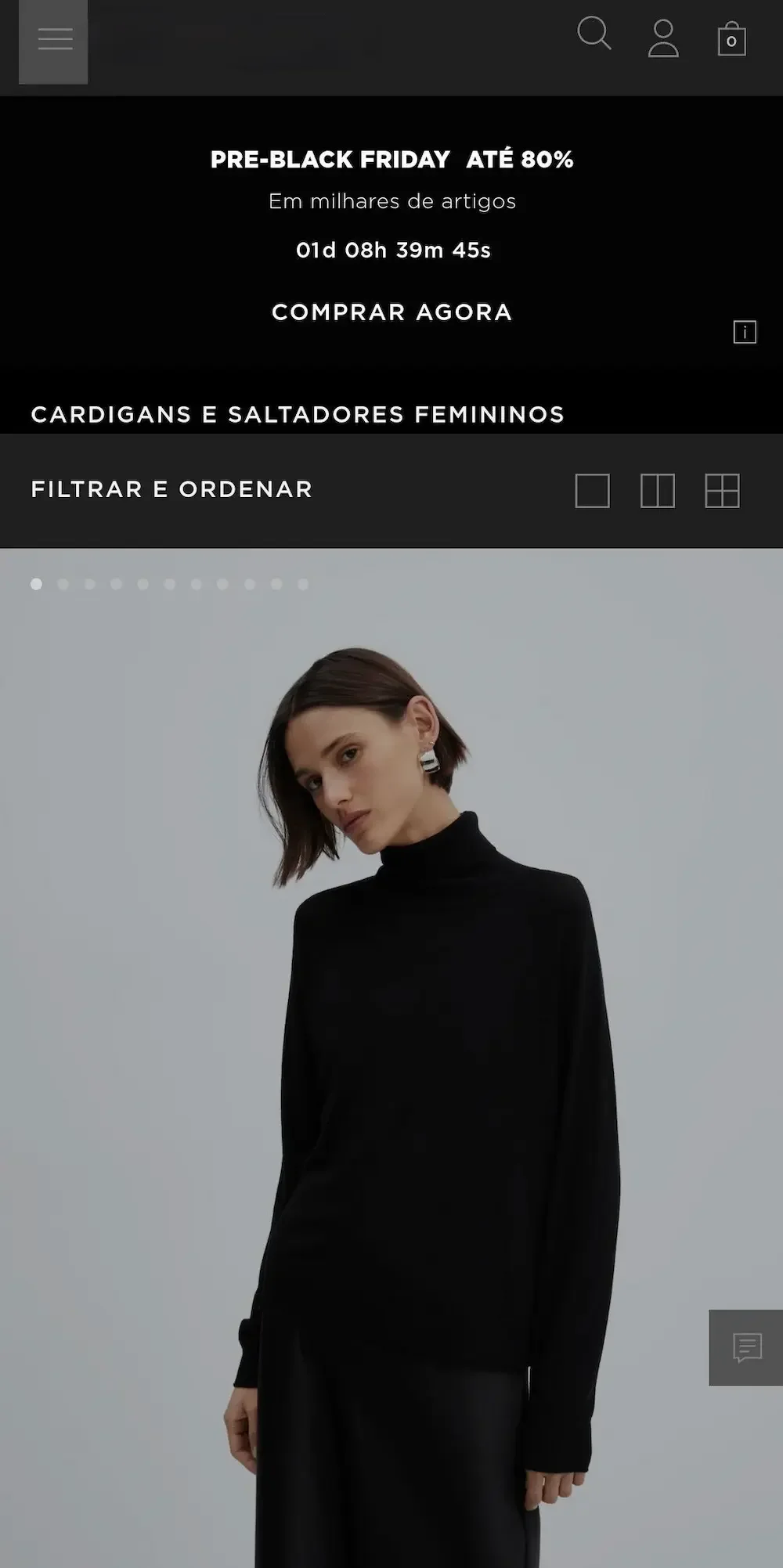
A curious example of a lack of vocabulary appropriateness for a certain target audience is the use of saltadores in this online store website, a literal translation of "jumpers", when the correct term in European Portuguese is camisolas.
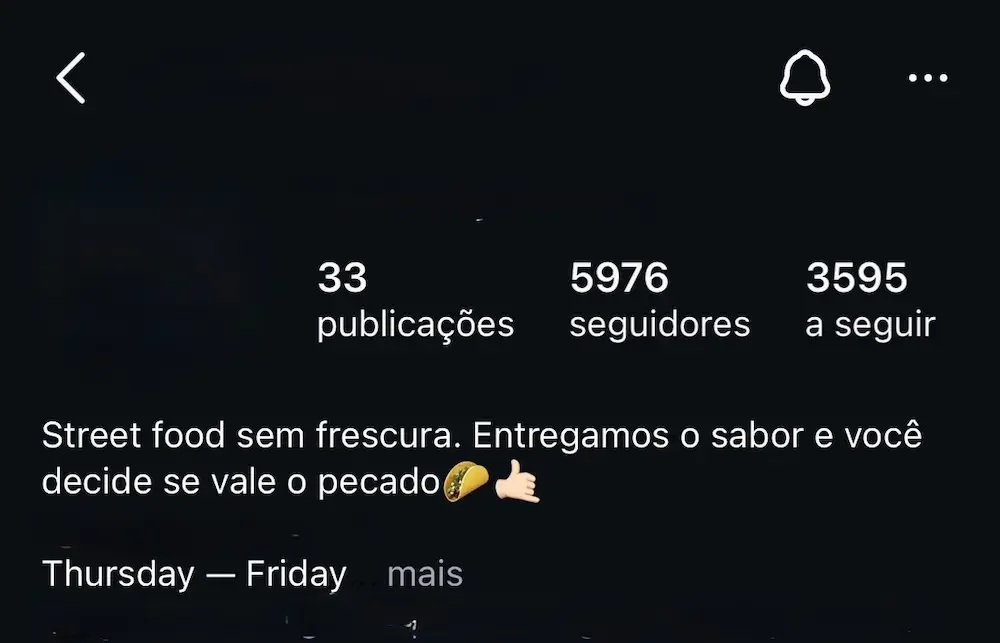
This is a description of a Brazilian-owned business in Portugal.
Taken literally, a European Portuguese reader may interpret sem frescura as referring to a lack of freshness in the food itself, and not a lack of pretension or fuss (which is what this sentence means in Brazilian Portuguese).
In European Portuguese, frescura is associated with freshness when used in marketing localisation in a food context (fresh ingredients or produce).
So at first glance, street food sem frescura can unintentionally sound like "street food that isn't fresh", which is the opposite of the intended marketing message.
The intended meaning is therefore not reliably carried across. A local reader may pause or misread before reinterpreting it.
This may lead to a loss of confidence in the restaurant or even a decrease in the intention or willingness to try the food in question.
Clearer, more appealing alternatives with a lightly teasing tone in European Portuguese would be:
Street food descomplicada. Nós tratamos do sabor. Difícil é resistir.
Street food despretenciosa. Nós tratamos do sabor. Tente resistir!
Street food de verdade. O sabor fica por nossa conta. A tentação é sua.
Street food pura e simples. Do sabor tratamos nós. Resistir é consigo.
4. Translating marketing copy instead of transcreating it
When the goal is for a message to resonate with a target audience, transcreation and creative adaptation play a key role in the process.
Literal translations of slogans and campaigns often fail to have the desired impact on local audiences, resulting in ambiguity and poor brand messaging.
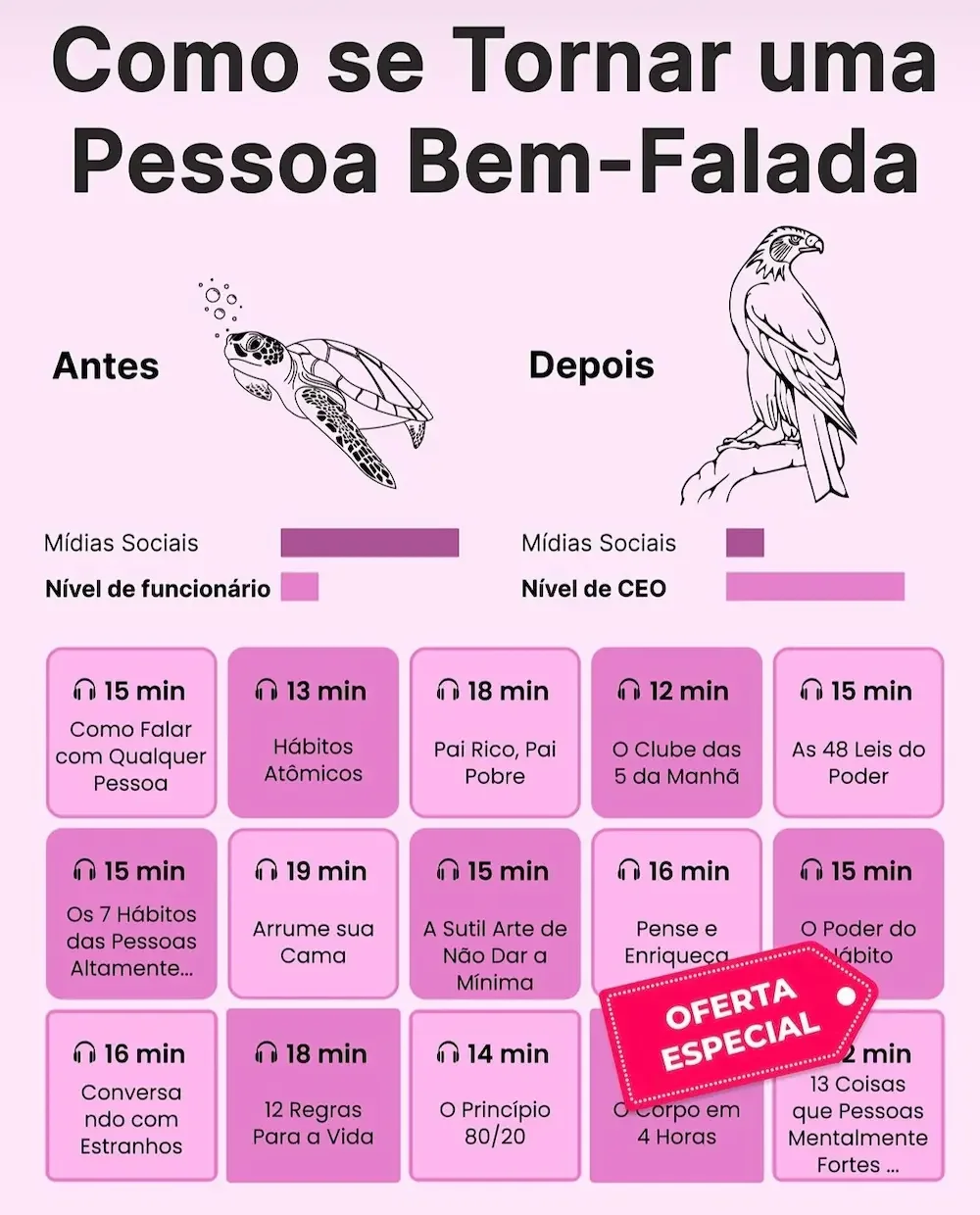
This literal approach presents the Brazilian Portuguese wording, resulting in confusion and alienation in Portugal.
A good localisation, on the contrary, would adapt both language and cultural framing. This would involve:
Replacing the Brazilian Portuguese forms with European Portuguese equivalents: redes sociais instead of mídias sociais, colaborador instead of funcionário, atómicos instead of atômicos, a sua instead of sua, subtil instead of sutil.
Pessoa bem-falada is an expression that exists in European Portuguese, but has been translated literally, so it's not the most accurate equivalent of "well-spoken". While bem-falado(a) can describe someone who speaks well, it may also be interpreted as someone who is well regarded by others.
As a result, it does not convey the same sense of eloquence, confidence, or persuasive communication as the English term well-spoken.
More natural, suitable localised options would be:
Como ser (uma pessoa) eloquente.
Como comunicar com clareza e eloquência.
Como desenvolver a capacidade de comunicação.
Como melhorar a forma como comunica.
A few transcreation options that would convey the right impact:
Cative os outros com a sua eloquência.
Aprenda a comunicar com impacto.
Seja a pessoa mais eloquente da sala.
A major issue here is also not using the correct translated book titles for Portugal. This matters because book titles differ from country to country and form part of a shared cultural reference.
Not using the correct titles results in inconsistency, reduced clarity, and a loss of credibility for audiences familiar with the correct titles.
The translation fails to fully align language, cultural references, and editorial conventions with the target market.
This is a case where literal translation would be insufficient and potentially misleading in a European Portuguese context, localisation would make the message more meaningful, but transcreation would be the most appropriate option to resonate with the audience.

The sentence Paga apenas pelo que ficas illustrates the difference between translation and transcreation in marketing copy.
The message sounds literal and does not reflect the natural, persuasive tone typically used in European Portuguese retail and fashion communications.
In this type of subscription service, the objective is not only to explain the process but also to highlight the convenience, flexibility, and confidence it offers customers.
A transcreated version would therefore focus on the benefit rather than on a direct linguistic transfer of the source text.
More natural alternatives would be:
Experimenta tudo. Paga apenas as peças com que quiseres ficar.
Fica com as peças de que mais gostas. Devolve o resto.
Experimenta primeiro e paga apenas as tuas favoritas.
Experimenta sem compromisso. Paga apenas o que te assenta bem.
Experimenta e paga apenas as peças que te ficam bem.
Escolhe sem pressas. Só pagas as peças que te favorecem.
These versions preserve the original commercial intent while sounding more natural and engaging to a European Portuguese audience.
I find it very appealing to say that the person who receives the box can try every garment and buy only the most flattering pieces of clothing for their body type.
A contrasting sentence (tudo vs. só or apenas) would clarify the purpose and benefits of this subscription service.
5. Letting grammar and/or spelling mistakes slip through
From simple typing mistakes to errors that can make the audience pause, feel baffled, or even laugh, language quality control does matter.
Keep reading to discover a few examples that demonstrate why.

This sentence mixes an implied formal address (seus) with a marketing-style imperative list.
In European Portuguese, with the formal address, the correct imperative form of the verb gerir is gira.
Gere os seus livros is therefore incorrect, which makes the sentence sound mismatched and, let’s be honest, look bad. It’s a glaring mistake in such a short, prominent sentence.
Similarly to a previous example, the use of seus livros instead of os seus livros suggests a Brazilian Portuguese sentence structure.
It also reads like a literal translation rather than a fully natural copy in "book lovers" vs. amantes de livros.
Two cleaner and correct versions in European Portuguese would be:
Digitalize, organize e gira facilmente os seus livros — ideal para quem adora ler!
Digitalize, organize e faça a gestão dos seus livros com facilidade — ideal para quem adora ler!
The sentence flows more naturally in European Portuguese if the adverb facilmente appears after the verb gerir.
Faça a gestão is an even more natural word choice for a Portuguese audience than gira.
Or, if you decide to change the focus to the app, you could say:
Digitaliza, organiza e gere facilmente os seus livros — ideal para quem adora ler!
6. Losing your brand voice in translation
If a foreign brand creates content for another country, it should not carry over expressions and structures from its own language.
The focus should be on brand voice consistency. Otherwise, the message may not be understood properly, and engagement is likely to drop.

This sentence feels like a direct translation that wasn't fully adapted to the right tone of voice in European Portuguese.
Se te propusiste is not merely untranslated Spanish; it is a mix of unlocalised source content and linguistic inconsistency.
This makes the slogan not only awkward, but also fails basic European Portuguese natural phrasing, which can immediately undermine the credibility of a company's brand identity, especially if it's entering the market.
The intended meaning ("If you decided to eat better") is understandable, but in European Portuguese, this would normally be expressed in a more natural, consumer-facing way.
Here are a few natural alternatives:
Gostavas de/Queres ter uma alimentação mais equilibrada? Experimenta a [Brand name].
Se decidiste fazer escolhas mais saudáveis, experimenta a [Brand name].
Alimenta-te melhor com a [Brand name].
Aposta na tua nutrição com a [Brand name].
Melhora a tua alimentação com a [Brand name].
7. Using inconsistent language in communication
Going back to the sequence of emails I received from an online store, I could not help but notice the brand's lack of language consistency.
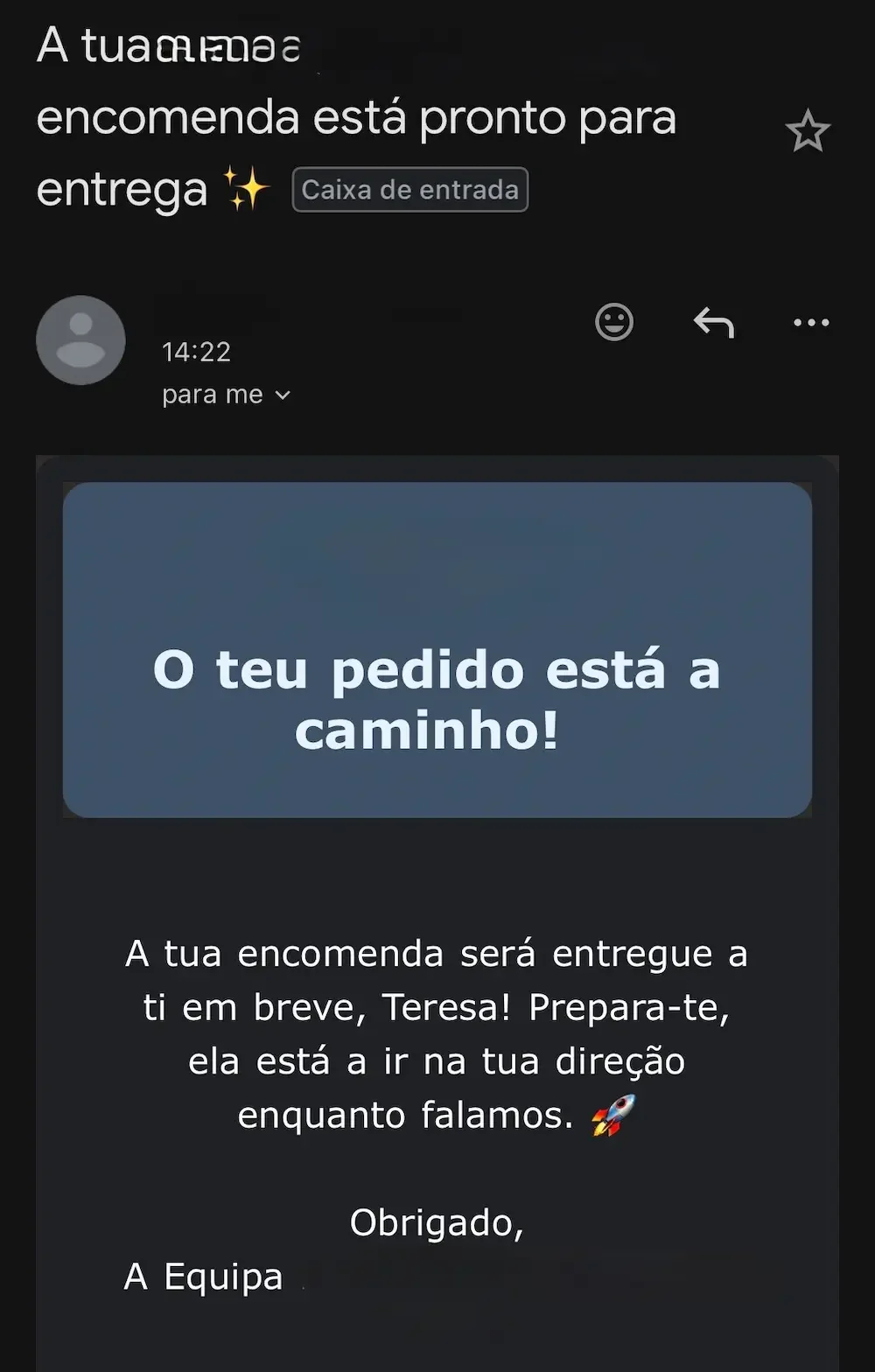
In this email, the informal tu is used, which, in my opinion, is the most appropriate form of address for a Portuguese audience in the context of a playful, quirky online store (young urban consumers who seek affordable, creative products).
However, shortly after I placed the order online, the brand used the formal address você in its email.
This inconsistency in the level of formality is jarring to readers.
It may be difficult to understand if you’re not a native speaker, but it’s unnatural and quite distracting.
Picture yourself trying to focus on a brand's message when the tone keeps switching between formal and informal.
If the main purpose of a customer-brand relationship is to create closeness between the buyer and the brand, this is definitely not the best approach.
Also, they use both pedido and encomenda as translations of "order", without any consistency, which generates confusion.
My suggestion is consistent in terms of vocabulary and sticks to the informal form of address:
Subject: Encomenda da [Online store name] pronta para entrega.
A tua encomenda está a caminho!
Vais receber a tua encomenda em breve, Teresa.
Prepara-te, pois está/já vai a caminho.
Obrigado,
A Equipa [Online store name]
Consistency in multilingual content and brand voice can be achieved with good terminology management, a strong localisation strategy, and keen, experienced eyes to detect and amend inconsistencies.
Conclusion
Overlooking localisation, transcreation, and language quality often undermines a brand’s credibility in the European Portuguese market, yet many clients commissioning translation work do not fully consider the impact this can have.
After having read this article, I hope it has enlightened you on the importance of clear, effective, and appropriate communication.
All of these examples are mistakes. Some are more serious than others, but the good news is, all of them are avoidable.
In order to do so, you may want to focus on language quality assurance and rely on the help of experienced professionals. Specialists who know the Portuguese market, understand the country's culture, and know exactly which tone of voice to use with a specific target audience.
Investing in high-quality European Portuguese content can be highly beneficial for your business.
It helps brands build trust, strengthen their reputation, and create more meaningful connections with European Portuguese audiences.
Have you reflected on all of the above and are considering hiring the services of a seasoned European Portuguese Localisation Specialist?
I can help you get rid of these sorts of problems and create beautiful, naturally flowing texts that fit your business like a glove.